




Discover the venue
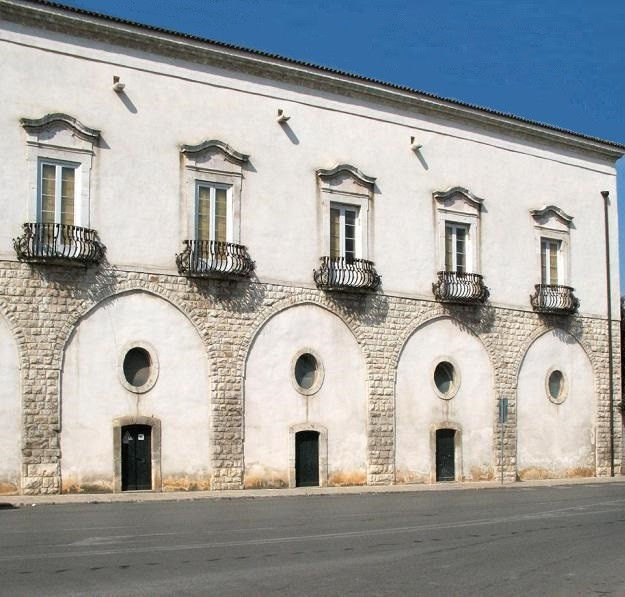
Palazzo Marchesale holds within its walls a history spanning a thousand years, shaped by successive phases of construction that transformed it from a defensive tower protecting the small settlement into the elegant aristocratic residence of the Marchesi Venusio in the 18th century.
Analysis of the different types of masonry incorporated into the building has allowed its origins to be traced back at least to the Norman period. Between the late 11th and early 12th centuries, Ugo da Frassineto, the first Dominus of Turi and Frassineto, commissioned the earliest nucleus of the castellum around a pre-existing Byzantine or Lombard tower. Standing at the highest point of the settlement, the tower served as a lookout and defensive structure for the developing town. Archaeological excavations in the area have also uncovered pottery fragments dating from the Byzantine period.
With the arrival of the Aragonese in the Kingdom of Naples and of the Moles family, Barons of Turi from 1546, the castle began its transformation into an aristocratic palace. It was enlarged to meet the administrative needs of the new feudal lords. The ground floor and underground areas housed the feudal administrative offices, the Governor’s headquarters, prison cells, stables and service areas, while the first floor was transformed into a series of sumptuously decorated and furnished reception rooms.
In 1752, following the definitive sale of the fiefdom, the estate passed to the Venusio family of Matera, a wealthy family of bankers. They began a major expansion and transformation of the palace, including the opening of a new town gateway, known as “Portanova”, which can still be seen today.
The Venusio family also sought to remove many traces of the building’s earlier past, transforming it into a more refined residence in keeping with 18th-century artistic and architectural tastes. Windows and large openings were embellished with curved pediments, long balconies were adorned with elaborate wrought-iron railings, and the rooms of the piano nobile were enriched with magnificent 18th-century interior decorations.
RELATED ARTICLES:
L’evoluzione urbanistica di Turi: tra castello, mura e borghi
Opening days and times
Not open to public
Our Services
Visita un punto di interesse
Languages
Price range
Inglese, Italiano
Free of charge
You can find us here
Contact
+39 320 9527257