


Oronzo De Carolis. When a Town Searched for a Sign

There are moments when a town does not ask for explanations, but for signs. Turi, in the aftermath of the Great War, was one such place. The bells rang as they always had, yet faces had changed. Faith was no longer enough to reassure; it had to respond.
It was then that Oronzo De Carolis began to speak.
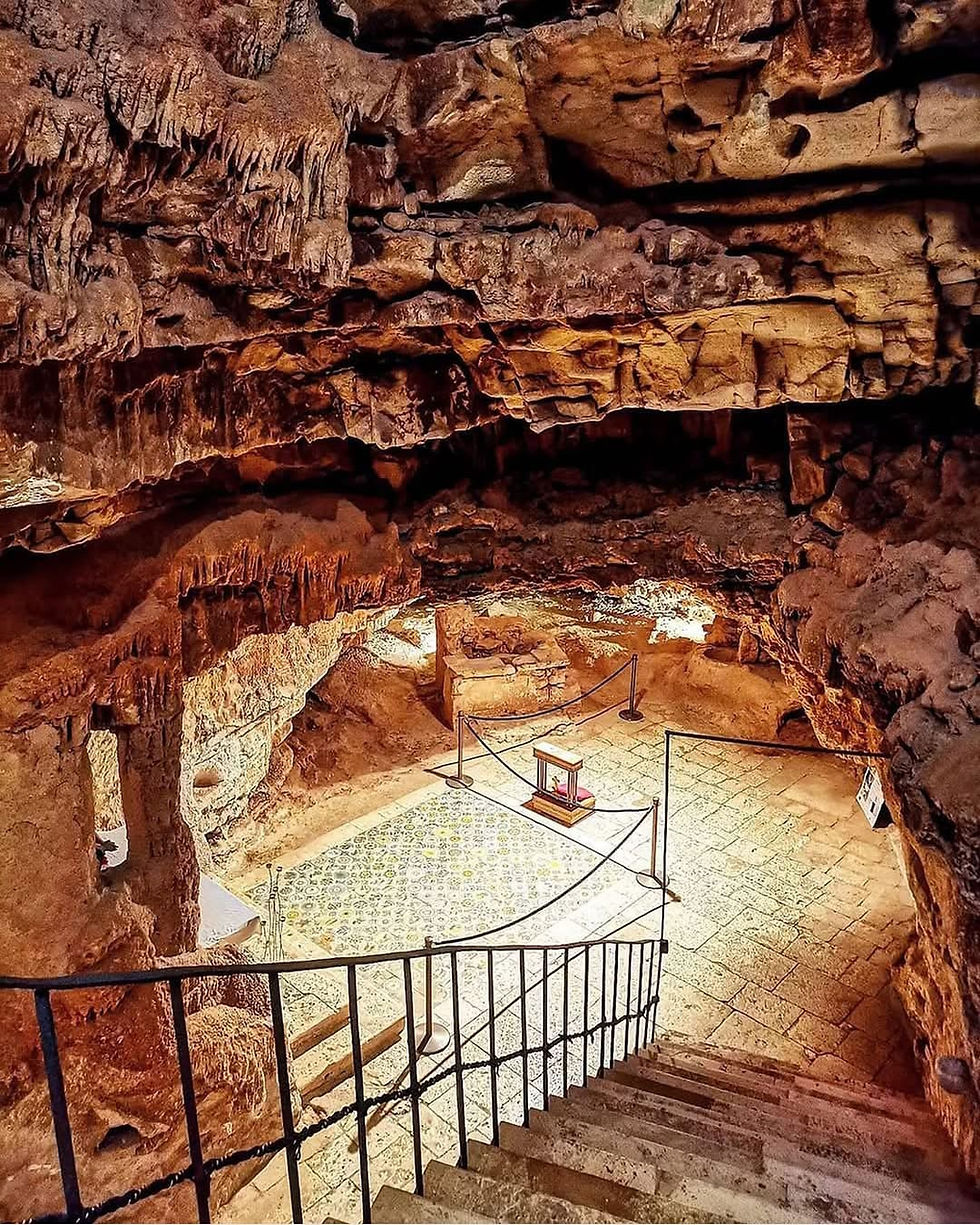
He did not present himself as a prophet, nor as a guide. He was an ordinary man, someone who knew fatigue and silence. He would descend into the grotto beneath the Church of Saint Oronzo and remain there for long stretches, motionless, as if listening. When he returned to the surface, he said that the Saint had appeared to him. Not in a dream, but while awake. Not to instil fear, but to promise peace.
The news spread quickly, without proclamations. First in a few homes, then along the streets, and finally in the fields. Some laughed, some doubted.
Many—too many—wanted to see.

The grotto became the centre of a new expectation. At night, candles were lit, prayers murmured, protection requested. Around Oronzo gathered women weary of waiting, men returned from the war with lost eyes, young people searching for direction. They were called penitents, but none of them felt so: they were simply people who hoped.
And hope, when it grows without measure, changes shape.
There was talk of signs, of blessed objects, of whispered promises. Every word became certainty, every gesture a revelation. The grotto—refuge and memory for centuries—was charged with a new and restless energy. Faith no longer asked for silence; it demanded immediate answers.
The Church intervened—firmly, yet with concern. Saint Oronzo, it was said, does not speak through exaltation, nor does he choose improvised intermediaries. Devotion requires restraint, not clamour. But the warning came when the wave was already high.
By the time the civil authorities stepped in, the affair had taken on the contours of a public case. Investigations were carried out, interrogations held, attempts made to restore order. Oronzo De Carolis was never exposed as an impostor. There was no conscious deceit in his words. Rather, there was a faith pushed to its limit, becoming the mirror of an entire community.
Then, slowly, everything faded. The nights at the grotto fell silent again. Voices dwindled. The story slipped to the margins, where uncomfortable things are left to rest.
Today, a stele remains, in the shade of the cypresses of the cemetery of Turi. It tells neither of miracles nor of condemnations. It simply remembers that, in a difficult time, a town sought Saint Oronzo with too much urgency—and found itself.
Because the story of Oronzo De Carolis is not only about visions. It speaks of fear, of hope, of a fragile boundary between faith and need. And it is precisely there, on that boundary, that the story continues to question us.
Credits and references
Text and historical research: Giovanni Lerede
Sources:– Lia Daddato, studies on Utriculus and Il Paese– Diocesan Archive of Conversano–Monopoli– Prefectural records and documents of the Bari Carabinieri– Archive of the Church of Saint Oronzo, Turi
Reference publication: Il Paese, no. 332 – August 2025


Comments